
|
DAVID BOWIE "LET'S DANCE" LP
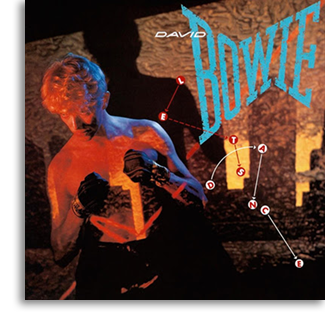 Is
Bowie "new wave" by any objective definition? Probably not in the world
of rock journalism or those who consider themselves serious scholars of
pop music, pop culture, or pop celebrities. But to fledgling young me,
he was the pinnacle of hip. Don't forget (I'm talking to myself, here)
that I saw him perform "TVC15," "Boys Keep Swinging" and "The Man Who
Sold the World" on Saturday Night Live in 1979 in what's still a pretty
powerful performance (backed by Klaus Nomi and Joey Arias, no less).
And I watched it with my mom! He was basically an aging mime at heart,
but still at the very cutting edge of all things in 1983 (to me). Is
Bowie "new wave" by any objective definition? Probably not in the world
of rock journalism or those who consider themselves serious scholars of
pop music, pop culture, or pop celebrities. But to fledgling young me,
he was the pinnacle of hip. Don't forget (I'm talking to myself, here)
that I saw him perform "TVC15," "Boys Keep Swinging" and "The Man Who
Sold the World" on Saturday Night Live in 1979 in what's still a pretty
powerful performance (backed by Klaus Nomi and Joey Arias, no less).
And I watched it with my mom! He was basically an aging mime at heart,
but still at the very cutting edge of all things in 1983 (to me).It's also worth noting that I bought this cassette at K-Mart in Turlock during (I think) the spring of 1983. This happened at a time when I didn't have a working cassette player that I could reliably play it on - the only machine we had in the house was a clunky mono machine from the early 1970s that would notoriously eat tapes, freeze, stall, and play at the wrong speed. It was on this machine that I had to experience the album, and had to pause/rewind/reset it constantly. For the historic record (pun), I had already picked up the single (again, at a K-Mart) and found a copy of The Rise & Fall of Ziggy Stardust & The Spiders from Mars a few months later at Payless Drugs on McHenry. July 1983, to be precise, since I got the X-Men issue when Rogue joined the team on the same afternoon. On to the record itself: "Let's Dance" is still a belter, though so much of the song was created entirely by Nile Rogers' in-studio trickery; "China Girl" is still kind of lame, and "Criminal World" is probably the second best track on the album even though it's a cover. Tunes like "Modern Love," "Putting Out Fire," "Ricochet," etc. are mostly unassailable at this late date. I still far prefer his 1970 - 1980 output, but I will never not love this record and all its faults and quirks. 
THE FIXX "REACH THE BEACH" LP 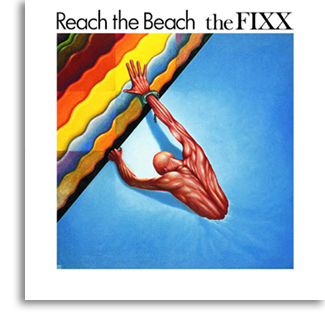 This
is kind of a brave moment: I'm writing this blog post when I'm at the
office and really ought to be performing my tasks. I'm going to just
take a moment and enjoy the very small return to normalcy that this
represents. Anyway, back to the thing. My life-spanning retrospective
review of records I enjoyed as a young person continues with Reach the
Beach, a generally-ignored LP that includes two legitimate hit singles
("Saved by Zero" and "One Thing Leads to Another"), some ringing
guitar, very Bowie-esque vocals, swirling synths, and a crisp
production that highlights the component parts in crystal relief. It's
not art, not by far, but it sounds a damn sight better than Thompson
Twins. Once of their most-direct market competitors. This
is kind of a brave moment: I'm writing this blog post when I'm at the
office and really ought to be performing my tasks. I'm going to just
take a moment and enjoy the very small return to normalcy that this
represents. Anyway, back to the thing. My life-spanning retrospective
review of records I enjoyed as a young person continues with Reach the
Beach, a generally-ignored LP that includes two legitimate hit singles
("Saved by Zero" and "One Thing Leads to Another"), some ringing
guitar, very Bowie-esque vocals, swirling synths, and a crisp
production that highlights the component parts in crystal relief. It's
not art, not by far, but it sounds a damn sight better than Thompson
Twins. Once of their most-direct market competitors.I bought this record on cassette in early 1984, having listened to the biggies and enjoyed the rock videos. In fact, I actually had a poster of the band on my wall in that pivotal time when I first cut all my hair off and took to Converse Hi-Tops and cuffed jeans. It wasn't punk, but was vaguely tense and menacing, and the songs were memorable. On that front: the songwriting isn't genius but at least they're songs, competently played and recorded, and more substantially weighty than Frankie Goes to Hollywood covering "Do You Know the Way to San Jose," which I recently subjected myself to. The Fixx are not a good band, really. But I can still play the record and like it. It suited my morning commute just fine today. Ought to mention that I did, in fact, get to see the band play one song ("Red Skies at Night," which I don't really know at all) when Andy's band opened for them at some kind of Grateful Dead-affiliated nightclub in Mill Valley. And they looked fantastic!
THE POLICE "GHOST IN THE MACHINE" LP 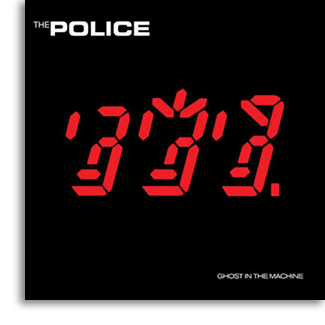 I
have to preface this by stating clearly that the Police were my
favorite band in 1983 and into 1984, and it was largely informed by
this particular album. Something about it aligned perfectly with my
interest in post-apocalyptic science fiction, D&D, swirly
synthesizer sounds, spiky hair, and on and on and on. I also think this
was the first "rock LP" that I purchased on vinyl, coming shortly after
I bought Bowie's Let's Dance on cassette. I'm reasonably sure that I
picked it up at Ardan's department store in McHenry Village, the same
place I got my Empire Strikes Back action figures (priced at $2.49
each). They had a tiny rack of LPs and cassettes toward the front of
the store, near the cash registers. I would have had to save up for it,
my allowance not yet having been bumped up to $10/week (which happened
later in my teens). I remember that the LP cracked in some strange
mishap, after which I could no longer play the first two tracks on
either side. Unfortunate. I
have to preface this by stating clearly that the Police were my
favorite band in 1983 and into 1984, and it was largely informed by
this particular album. Something about it aligned perfectly with my
interest in post-apocalyptic science fiction, D&D, swirly
synthesizer sounds, spiky hair, and on and on and on. I also think this
was the first "rock LP" that I purchased on vinyl, coming shortly after
I bought Bowie's Let's Dance on cassette. I'm reasonably sure that I
picked it up at Ardan's department store in McHenry Village, the same
place I got my Empire Strikes Back action figures (priced at $2.49
each). They had a tiny rack of LPs and cassettes toward the front of
the store, near the cash registers. I would have had to save up for it,
my allowance not yet having been bumped up to $10/week (which happened
later in my teens). I remember that the LP cracked in some strange
mishap, after which I could no longer play the first two tracks on
either side. Unfortunate.Nowadays, I have a tough time listening to any Sting-adjacent musical project. He's had 40+ years of prominence and plenty of opportunities to annoy. However, none of this was a factor for me in 1983, and the relative difficulty of finding any information about the band at the time made them all seem underexposed, unknowable and mysterious. Kind of like the title of the record itself, and "Spirits in the Material World" which kicks off the album so memorably. Really, the album has a ton of interesting songs with spooky lyrics and a sense of science fiction mysticism: "Invisible Sun," "Secret Journey," "Demolition Man," "Omegaman,"all of them perfectly aimed at me, the Young Consumer. This might have been their last great record before the commercial smash of Synchronicity (which I will write about, and definitely listened to frequently). I don't think I'd broadcast it widely, but Ghost in the Machine still holds a place of honor in my brain. There!
TALKING HEADS "MORE SONGS ABOUT BUILDINGS AND FOOD" LP 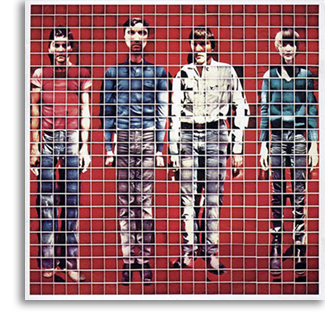 I'm
tired, hung-over, stressed-out, and worried about all the things I need
to accomplish both personally and professionally this week (and getting
new blog posts up is another one of those items, even blog posts that
no one other than me will read). With that said, I'm taking a few
precious minutes to expend a little mental energy on the 2nd LP by
Talking Heads, More Songs About Buildings & Food,
which is a record I know extremely well and don't particularly care
for. Though I should specify that I really know it as a cassette, and
wound up buy a replacement tape on eBay within the last couple years. I'm
tired, hung-over, stressed-out, and worried about all the things I need
to accomplish both personally and professionally this week (and getting
new blog posts up is another one of those items, even blog posts that
no one other than me will read). With that said, I'm taking a few
precious minutes to expend a little mental energy on the 2nd LP by
Talking Heads, More Songs About Buildings & Food,
which is a record I know extremely well and don't particularly care
for. Though I should specify that I really know it as a cassette, and
wound up buy a replacement tape on eBay within the last couple years.Later in the Day: I feel slightly better now, and up to the task of discussing this record. I had already bought Speaking in Tongues by the time I picked this up (at the Record Factory, I think), and expected more of the same repetitive synth-funk-fusion found on that LP. Rather, I was surprised with the clean production (courtesy Eno), chiming guitars, and overweening sense of twee cuteness on tracks like "Thank You for Sending Me an Angel," "With Out Love," "Artists Only," and others. It's a nerdy clutch of tunes that can drive me in either direction (pro- or anti-), but, like a lot of records from that time, I know it really, really well. Another important point: this is not a record for a 13-year-old boy to hear and immediately understand. I remember playing it for Brian Tarver in my room and him laughing at it (specifically "Girls Want to be With the Girls"). It just doesn't have the immediate impact of a Black Flag, Fear, or even Ebn-Ozn (more about them, later). In defense of the band, I have become an admirer of Fear of Music and Remain in Light over the intervening decades. So, yeah.
EBN-OZN "FEELING CAVALIER" LP 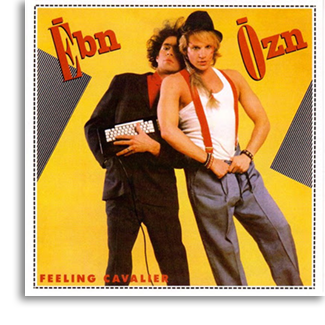 This
one almost didn't make the cut, and with good reason: it's not
exceptionally memorable. Of all the records included in the second
installment of the New Wave Checklist, this is the one I'm least
familiar with and the weakest attachment. I had the cassette, but
didn't hang on to it for too long (which I regret). I love the design
of the cover: the duo's styling, the kooky typography, the whole
brightly-colored packet. They had a catchy synth-funk single that
received a decent amount of rotation on TBS' Night Tracks ("AEIOU
Sometimes Y"), and were weird and quirky in a way I appreciated as an
innocent 8th grader. This
one almost didn't make the cut, and with good reason: it's not
exceptionally memorable. Of all the records included in the second
installment of the New Wave Checklist, this is the one I'm least
familiar with and the weakest attachment. I had the cassette, but
didn't hang on to it for too long (which I regret). I love the design
of the cover: the duo's styling, the kooky typography, the whole
brightly-colored packet. They had a catchy synth-funk single that
received a decent amount of rotation on TBS' Night Tracks ("AEIOU
Sometimes Y"), and were weird and quirky in a way I appreciated as an
innocent 8th grader.Listening to it now, it's clear that the "band" were a studio project that relied on two photogenic youngish New Yorkers to sell music that was probably written, performed and recorded by unattractive session players. One of the standout tracks was always "Bag Lady" (an expression you don't hear frequently nowadays). It's clear from the metal guitar and big rock swoops and yelps that Ebn-Ozn were casting a wide net. This is the same New York milieu that produced the Breakfast Club, Bush Tetras, early Madonna, etc. It's exuberant but uncool, on Elektra and not especially in tune with the Kids on the Street. "Stop Stop Give It Up" is cloyingly sweet in a way that I can scarcely bear, "I Want Cash" is a busy rip-off of the Flying Lizards' cover of "Money," "Kuchenga Pamoja" is a culturally-insensitive precursor to Disney's Lion King soundtrack, etc., etc. This really is all over the map and is well-nigh incomprehensible. It seems technologically of a piece with Men Without Hats Rhythm of Youth, minus the wit and charm. Young Me was right to sell it. There are better new wave synth-pop records with bright yellow covers.
SPLIT ENZ "WAITA" LP 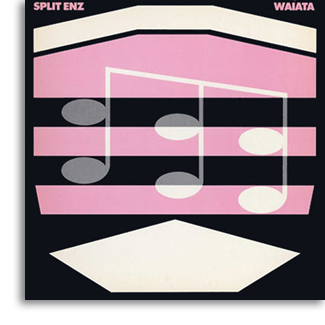 To
preface this: Split Enz were my favorite band for a chunk of 8th grade.
I first encountered the group as a single black-and-white band shot in
People magazine (I think it was part of a feature on Australian rock
bands, which they technically were for a period) and was instantly
struck by their bizarre, deconstructed, painted-up appearance. Hair
standing away from their heads at oblique angles, suits with giant
misshapen shoulder pads, off-kilter ties and drawn-on Spock eyebrows. I
hadn't heard of Klaus Nomi yet, but he seems like the likeliest
influence. I found a cassette (on A&M, no less) of their 1981 LP
Waiata and snagged it immediately. I might have even said "yoink!" when
I grabbed it off the shelf. To
preface this: Split Enz were my favorite band for a chunk of 8th grade.
I first encountered the group as a single black-and-white band shot in
People magazine (I think it was part of a feature on Australian rock
bands, which they technically were for a period) and was instantly
struck by their bizarre, deconstructed, painted-up appearance. Hair
standing away from their heads at oblique angles, suits with giant
misshapen shoulder pads, off-kilter ties and drawn-on Spock eyebrows. I
hadn't heard of Klaus Nomi yet, but he seems like the likeliest
influence. I found a cassette (on A&M, no less) of their 1981 LP
Waiata and snagged it immediately. I might have even said "yoink!" when
I grabbed it off the shelf.I think it still holds up well (having given it a retrospective listen yesterday while emptying out the basement), and is a novel blend of delicate pop melodies, wistful lyrical longing, blorpy synthesizers and overarching nervous/busy energy. "Hard Act to Follow" is a great entry into their realm, and tunes like "Walking Through the Ruins," "Wail," "Ghost Girl," "One Step Ahead of You" are at turns haunting, atmospheric and charming. The real strength here, I notice, is their songwriting ability and ease at crafting complete tunes (after having listened to a lot of tuneless twaddle as part of this project). It's obvious that Neil Finn was the main driver of the band, as both a tunesmith and remarkably gifted singer. Decades after I first heard this record, I was pleasantly surprised to hear him sing the closing-credits tune at the end of Peter Jackson's adaptation of The Hobbit (the first part, anyway). It really did feel like I had completed a Musical Circle of some kind. This LP is a bit outside what I've tended to listen to in the intervening years since I first heard it. I don't listen to a lot of "sad about the girl" songs, and haven't really turned to delicate synth/rock pop with soulful tenor vocals in times of need. But I will always enjoy this record and revisit it with fondness.
SPLIT ENZ "TRUE COLOURS" LP  Looking
back on it, it's a bit funny to include two Split Enz LPs back-to-back,
particularly since they're so similar on a surface level. The best
justification I can offer is that I just didn't want to listen to
Synchronicity on the way to work today, and that was the only other LP
that came to mind. I had to do a bit of searching to find a image of
the yellow/blue cover variant, but figured it was worth it. Anyway, on
to the music now that the preliminary housekeeping is done. Looking
back on it, it's a bit funny to include two Split Enz LPs back-to-back,
particularly since they're so similar on a surface level. The best
justification I can offer is that I just didn't want to listen to
Synchronicity on the way to work today, and that was the only other LP
that came to mind. I had to do a bit of searching to find a image of
the yellow/blue cover variant, but figured it was worth it. Anyway, on
to the music now that the preliminary housekeeping is done.This record (and indeed, the Split Enz full-stop) is best known for the opening track, "I Got You." Truthfully, if you needed to hear one song by the band, that would probably have you covered. It's got the sense of sad longing comingling with wide-eyed optimism, the neo-60s pop hooks, synthesizer noodlings, and a punchy sense of economy. The rest of the record follows along those lines, offering wistful pop with some new wave trappings and occasional near-punk energy (at least on "Shark Attack," which is probably as hardcore as the band ever got). I bought the A&M cassette of the record a few months after I picked up Waiata and was a little disappointed in it, maybe 'cause the songs are a bit more conventional and rooted in whatever kind of indie pop was wafting through New Zealand circles in 1979. "What's the Matter with You," "Nobody Takes Me Seriously," "Missing Person" and "Poor Boy" are all funny and moving from my modern perspective, and "I Hope I Never" is still as much of a drag as it ever was. I still like the Split Enz. Maybe not to "wearing a band t-shirt" level, but I like them.
TALKING HEADS "SPEAKING IN TONGUES" LP 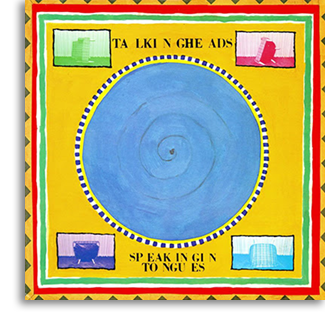 I've
got some mixed feelings about this particular LP, but will leap in
without hesitating. I bought Speaking in Tongues (on cassette,
naturally) some time after X-Mas break in that fateful 1983/84
transition period when I tested out bands and genres without any sense
of critical discrimination. I liked "Burning Down the House," and that
was all that was needed. I've revisited the record a couple times in
recent weeks, so I feel qualified to make an honest assessment. Did I
mention that I'm hung over? I've
got some mixed feelings about this particular LP, but will leap in
without hesitating. I bought Speaking in Tongues (on cassette,
naturally) some time after X-Mas break in that fateful 1983/84
transition period when I tested out bands and genres without any sense
of critical discrimination. I liked "Burning Down the House," and that
was all that was needed. I've revisited the record a couple times in
recent weeks, so I feel qualified to make an honest assessment. Did I
mention that I'm hung over?First things first: the loss of Brian Eno as producer (and fifth member of the band, really) is evident. I can't be arsed to look up who produced the record right now, but it sounds and feels like Nile Rogers, Trevor Horn, or another one of those Big Disco Guys that brought that signature sound to early 1980s clubland. To quickly summarize: it's a fun record that I played dozens and dozens of times in 1984, but didn't really possess a lot of staying power. It definitely didn't make the cut as a I moved away from rubbery synth-wave and towards guitar-based punk and hardcore (to be fair, the rest of Talking Heads discography didn't either). "Burning Down the House," "Naive Melody," and "Girlfriend is Better" are all still good tunes, but the rest of the material is pretty lightweight and not up to the intellectual standard of Fear of Music or Remain in Light.
THE POLICE "SYNCHRONICITY" LP 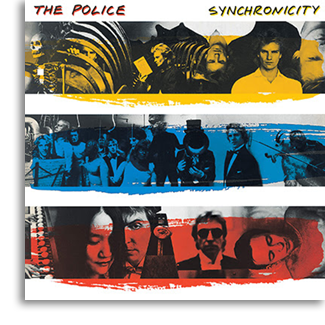 I'm
pretty clear on the provenance for this tape: I bought it with my X-Mas
money from Montgomery Ward, and rode my bike there to make the
purchase. I have distinct memories of locking up my bike outside the
store, and wearing my rust-colored fiberfill vest and a striped
button-up shirt. I had forgotten that yes, Wards did have a "music"
section where they sold LPs, cassettes and singles. So, so weird to
remember societal conventions like "department stores selling records
as well as dishwashers." In a way, this record was an X-Mas 1983 gift. I'm
pretty clear on the provenance for this tape: I bought it with my X-Mas
money from Montgomery Ward, and rode my bike there to make the
purchase. I have distinct memories of locking up my bike outside the
store, and wearing my rust-colored fiberfill vest and a striped
button-up shirt. I had forgotten that yes, Wards did have a "music"
section where they sold LPs, cassettes and singles. So, so weird to
remember societal conventions like "department stores selling records
as well as dishwashers." In a way, this record was an X-Mas 1983 gift.Another thing I remember is that this record (or the hit singles off it) were inescapable at the time, and in a way, still are. "Every Breath You Take" has a prominent position in season four of Stranger Things, and tunes like "Synchronicity I," "King of Pain," and "Wrapped Around Your Finger" are probably still in continuous rotation on oldies radio. Sting was already starting to morph into his later persona as Feyd Rautha, or maybe Doctor Frankenstein to Jennifer Beals' Bride. Andy Summers' meal ticket was about to expire. Copeland could retreat into his family fortunes and do whatever it is drummers do when they're off the clock. There are clunkers ("Murder by Numbers," "Mother," etc.) and kind of forgettable piffle like "Walking In Your Footsteps," but for the better part, this is a big step ahead of things like Zenyatta Mondatta and not a bad note to go out on. Can't put it much more succinctly than that. The band were to lose their cachet in very short order (partially inspired by Sting's headlong drive into AOR jazz-pop and shifting cultural tastes), but there are still plenty of listenable moments for those that care.
PUBLIC IMAGE LTD. "THIS IS WHAT YOU WANT, THIS IS WHAT YOU GET" LP 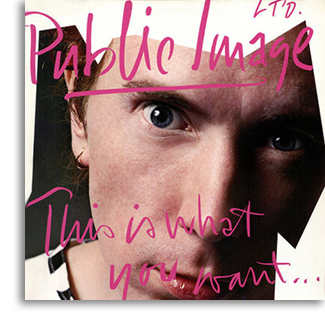 It's
fitting to end on this record, as in a way, it was the LP that saw my
original New Wave Era to its conclusion (after that it was all hardcore
and punk rock, at least until my attention began to stray toward other
genres and sounds). I picked it up at the Record Factory some time late
in the summer of 1984, right before school got out as I recall. If I
reach back far enough, I can vaguely remember riding my bike home from
the store on an afternoon after school let out, and playing it for the
first time before my mom came home from her job at the cannery. Sadly,
the first track ("Bad Life?") had a deep scratch to it, and I never
heard it properly until years later. It's
fitting to end on this record, as in a way, it was the LP that saw my
original New Wave Era to its conclusion (after that it was all hardcore
and punk rock, at least until my attention began to stray toward other
genres and sounds). I picked it up at the Record Factory some time late
in the summer of 1984, right before school got out as I recall. If I
reach back far enough, I can vaguely remember riding my bike home from
the store on an afternoon after school let out, and playing it for the
first time before my mom came home from her job at the cannery. Sadly,
the first track ("Bad Life?") had a deep scratch to it, and I never
heard it properly until years later.What do say about this record, and PiL in general? A lot of people despised the record on its release, some people probably like it, and others (like me) were too young and/or clueless to know any better. The horns are laid on heavily, the funk rhythms are at the fore, and Martin Atkins' big deep drums propel the tunes forward toward points unknown. Lydon was around 28 at the time, pretty young but beginning to feel the first hints of middle age. When I brought the LP to school with me (as one did), Kellie took one look at the back cover photography and exclaimed "he looks so old!" She wasn't wrong. At the time, I got a kick out of hearing the Sex Pistols guy sing for a band that sounded radically different and used some unconventional structures and instrumentation and stuff. Natch, I can't really stand the geezer in 2026. But I still hold records like First Issue, Second Edition, Flowers of Romance, this, and even Album (to a lesser extent) in high esteem. And I really like that red & green PiL badge I used to wear on my black London Fog overcoat. Postscript: I guess that's it for the "New Wave Listening Project" (or whatever you wanna call it). It was a noble experiment that led to some enlightenment, a little excitement, and a smidgen of boredom. I think I'll carry on reviewing records, though, with an eye toward different genres, periods of my life, and states of mind. We'll see what happens. |